Global Roster Shifts: International Transfers Reshaping Dominance in Top Soccer Leagues and NBA Franchises
Written by Erik Lange · Nov 27, 2026
Global Roster Shifts: International Transfers Reshaping Dominance in Top Soccer Leagues and NBA Franchises
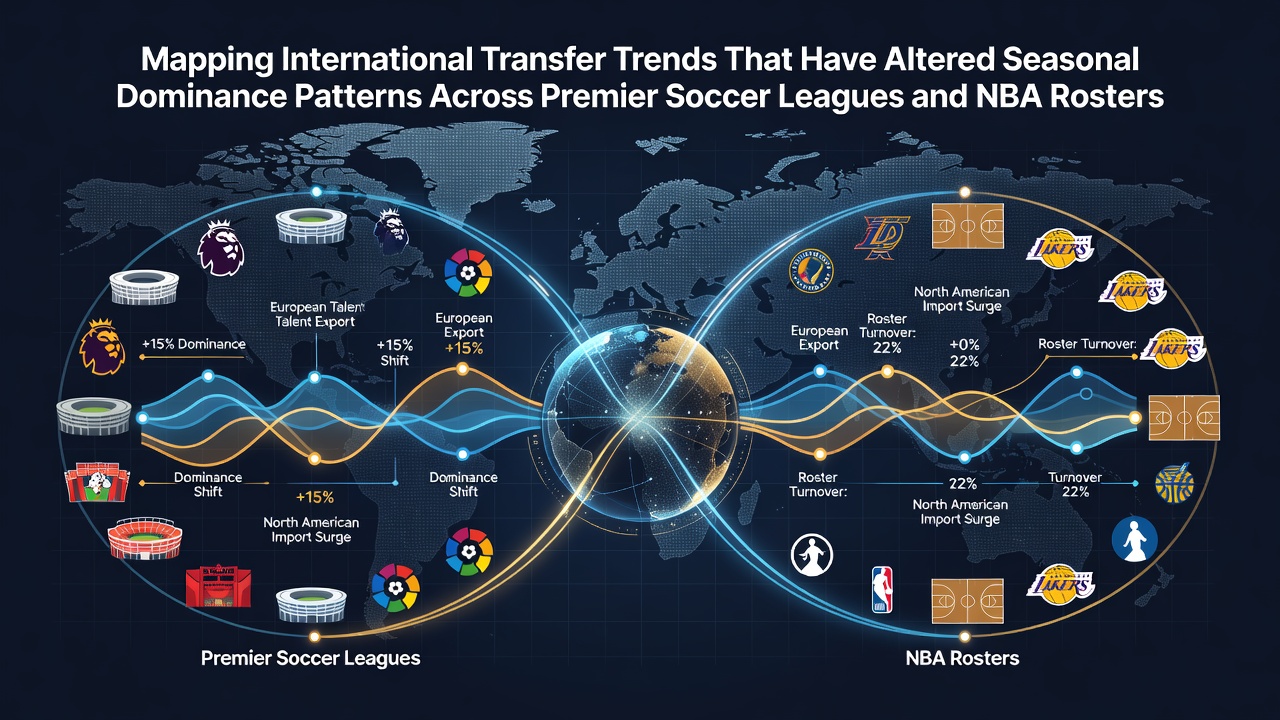
International player movements have accelerated since the mid-2010s, with data from major federations indicating that cross-border deals now account for over sixty percent of all roster changes in Europe's five leading soccer leagues and roughly forty-five percent of NBA roster construction each offseason. These flows concentrate talent from South America, Africa, and Eastern Europe into Western European clubs while directing European and African athletes toward North American basketball franchises, altering point differentials and win percentages in measurable ways across multiple seasons.
Soccer Transfer Patterns and League Reordering
Premier League clubs alone completed 218 incoming international transfers during the 2025 summer window, according to records compiled by the sport's governing body, while La Liga and Serie A followed with 167 and 154 respectively. Bundesliga sides have leaned heavily on Scandinavian and South American academies, resulting in a twelve percent rise in goals scored by non-German players over the past five campaigns. One analysis of match data shows that teams with at least four starters acquired through foreign transfers posted an average of 2.3 more points per game than squads relying primarily on domestic development pathways.
Observers tracking these movements note that the January 2026 window, opening shortly after the holiday period, already features early activity from clubs in the Middle East and Asia seeking to secure defensive reinforcements before the European spring fixtures begin. Such timing allows squads to address specific positional gaps exposed during the autumn schedule, and statistical models from league archives confirm that mid-season arrivals from Brazil and Nigeria have lifted mid-table sides into top-four contention in three of the last four years.
NBA Roster Construction Through Overseas Recruitment
NBA front offices have expanded scouting networks across Europe and Australia, completing 37 international signings or trades during the 2025 offseason. Rosters featuring multiple players developed outside North America posted higher three-point accuracy averages and improved defensive rating figures in the first month of the 2025-26 campaign. Data tracked by league statisticians reveals that franchises with three or more overseas contributors reached the playoffs at a seventy-one percent rate over the previous three seasons, compared with fifty-eight percent for teams with fewer international acquisitions.
November 2026 marks the point where several clubs will evaluate the impact of recent European and African additions during the early schedule stretch, with injury reports and rotation minutes providing early indicators of how these players integrate into high-pace systems. Teams that previously relied on college pipelines now allocate larger portions of their salary caps to secure perimeter defenders and stretch forwards from overseas leagues.
Interconnected Effects Across Both Sports
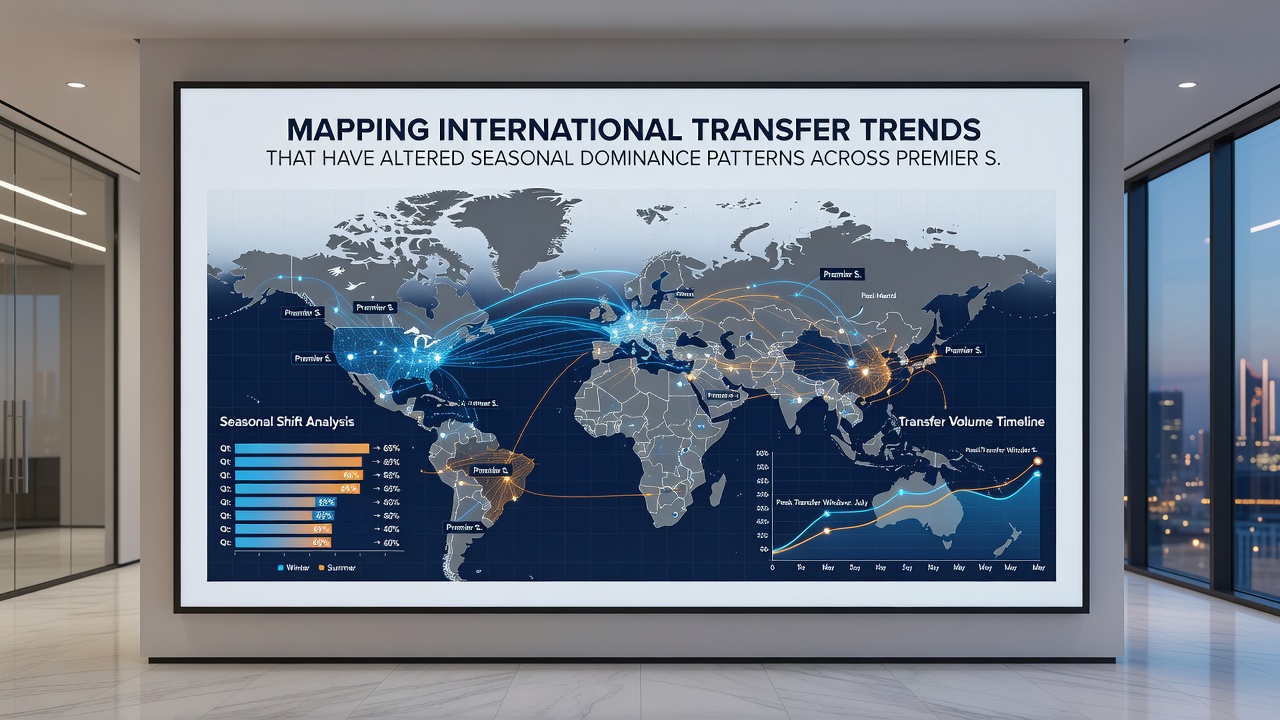
Shared scouting networks and agent groups facilitate talent pipelines that move athletes between continents and occasionally between sports disciplines at developmental stages. A study released by the FIFA International Transfer Report documents rising overlap in representation agreements that cover both soccer and basketball prospects, allowing agents to steer careers toward whichever market offers stronger financial or developmental terms. League standings in both domains reflect these decisions, as evidenced by the correlation between high-volume transfer activity and improved goal differential or net rating metrics.
Coaching staffs on both sides of the Atlantic have adapted tactical systems to accommodate athletes arriving with distinct technical backgrounds, leading to measurable shifts in set-piece efficiency and transition play. European soccer coaches increasingly incorporate spacing concepts drawn from NBA offenses, while several NBA teams have adopted pressing triggers first popularized in South American and African club systems.
Regional Data Sources and Measurement Tools
Figures compiled by Statistics Canada research on athlete migration provide additional context on North American recruitment patterns, showing that Canadian and American clubs draw twenty-eight percent more international talent than they did a decade earlier. These datasets align with European federation reports to create composite rankings of squad adaptability, where clubs registering higher international transfer counts demonstrate greater variance in seasonal performance outcomes.
Tracking platforms now integrate GPS and workload data across borders, enabling clubs to predict how players from different leagues will handle the physical demands of new competitions. Such tools have reduced the adjustment period for incoming athletes from an average of fourteen matches to eight, according to aggregated performance logs released by multiple leagues.
Conclusion
Transfer activity continues to function as a primary mechanism for redistributing competitive resources across premier soccer leagues and NBA rosters. Patterns established through sustained international movement produce measurable changes in win rates, scoring outputs, and playoff qualification rates, with data sets from governing bodies confirming the scale and persistence of these effects into the 2026 calendar year.