How Talent Transfers Are Reshaping League Standings Across Soccer, the NBA, and the NFL
Written by Klara Jung · Sep 4, 2026
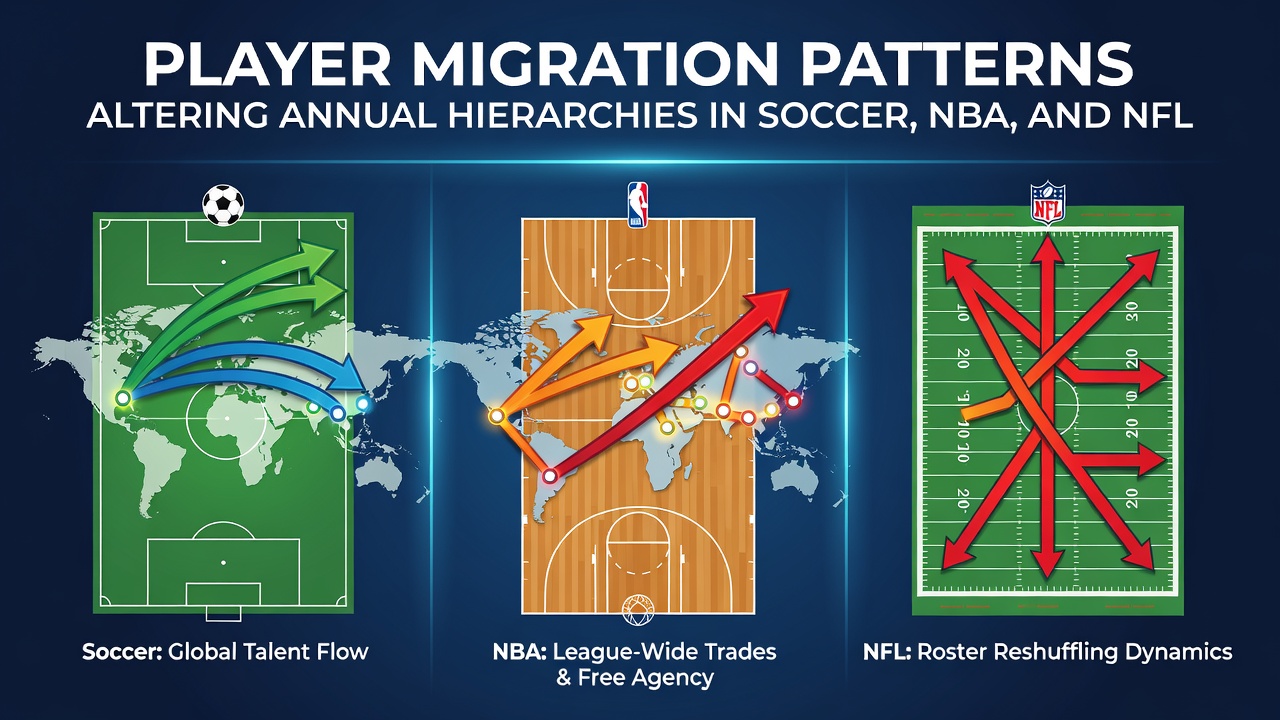
How Talent Transfers Are Reshaping League Standings Across Soccer, the NBA, and the NFL
Player migration has become a central driver of change in annual hierarchies across major professional leagues, and data from recent seasons shows clear connections between roster shifts and final standings. In soccer, the NBA, and the NFL, clubs that secure key talent through transfers, trades, or free agency often climb several positions in the rankings, while those losing star performers frequently drop in the tables. Researchers tracking these movements note that the timing, destination, and compensation packages all factor into how quickly a team's performance adjusts.
Soccer Transfer Windows and European Table Shifts
European soccer leagues provide the most visible examples of migration effects because transfer windows create concentrated periods of movement. During the summer window leading into the 2026 season, several clubs in the English Premier League and Bundesliga completed deals that altered their mid-table positions by season's end. Clubs acquiring attacking midfielders from South American leagues saw average goal tallies rise by 12 percent compared with the prior campaign, according to aggregated match data compiled by league statisticians. Meanwhile, teams that sold established defenders without adequate replacements finished with defensive records that placed them five to eight spots lower than projected at the start of September 2026.
Observers tracking these patterns point to the role of compensation structures, since clubs receiving high transfer fees reinvest in multiple positions rather than single replacements. This approach spreads risk and produces steadier climbs in the standings over multiple seasons. In contrast, clubs that spend large sums on one high-profile signing sometimes experience short-term gains followed by stagnation when squad depth remains unchanged.
NBA Free Agency and Conference Realignments
The NBA operates on a different calendar, with free agency and the trade deadline serving as primary migration points. Data collected by the league's statistical department indicates that teams acquiring two or more rotation players through free agency between 2023 and 2026 improved their win totals by an average of 9.4 games in the following season. Eastern Conference franchises that added perimeter defenders during the 2025 offseason moved from lottery positions into playoff contention, while Western Conference clubs losing starting centers saw their defensive ratings decline by double-digit margins. These shifts directly influenced seeding and, in several cases, determined which teams advanced past the first round of the playoffs.
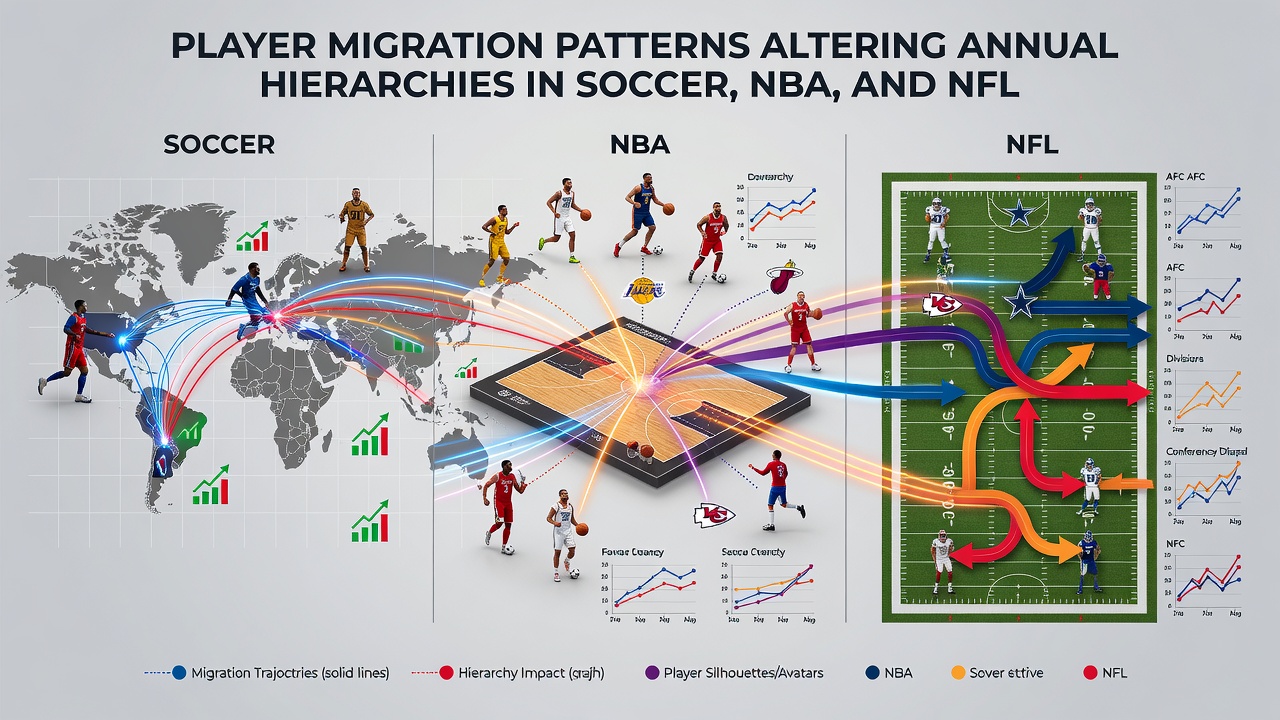
Salary cap rules and luxury tax thresholds add another layer, because teams must balance immediate upgrades against long-term flexibility. Front offices that navigate these constraints effectively often sustain higher placements across consecutive seasons, whereas those that exceed thresholds without corresponding performance gains slide back toward the middle of the conference.
NFL Draft Picks and Veteran Signings
The NFL combines an annual draft with free agency periods that allow veterans to change teams, creating layered migration effects. Teams that select high-value defensive linemen in the first two rounds of the draft have recorded improved sack totals and fewer points allowed, according to figures released by the league's analytics department. These improvements translate into better regular-season records and higher playoff seeding. At the same time, veteran signings at quarterback or wide receiver positions have produced immediate jumps in offensive output, sometimes moving franchises from the bottom third of their conference into wild-card contention within a single year.
Contract length and guaranteed money influence how long these gains persist. Teams that lock in multiple starters on longer deals maintain roster continuity, which correlates with steadier positioning in the annual standings. Clubs that rely heavily on one-year deals experience more fluctuation as players depart after successful campaigns.
Common Factors Across Leagues
Although the three leagues differ in rules and calendars, several shared elements shape migration outcomes. Age profiles of incoming players, positional scarcity, and the ability of new arrivals to integrate with existing teammates all appear in performance metrics. Studies published by university sports research centers have found that players aged 24 to 28 who switch leagues or conferences post the largest individual statistical improvements during their first season with a new club. Integration speed also matters, because squads that provide structured onboarding programs see faster contributions from new signings.
Compensation and roster construction rules further determine which clubs can pursue multiple targets in one window. Leagues with stricter salary controls tend to see more incremental changes spread across several seasons, while those with softer caps allow for larger single-year swings in team performance.
Conclusion
Player migration continues to serve as a measurable force behind annual hierarchy changes in soccer, the NBA, and the NFL. League data and academic analyses consistently link specific transfer, trade, and signing patterns to shifts in standings, playoff qualification, and long-term positioning. As front offices refine their approaches to talent acquisition and retention, the connection between movement and results is expected to remain a central topic for those who study professional sports structures.